Rat Control Torrance, CA-Same-Day Roof Rats & Norway Rats Removal
That scratching in your attic, walls, or garage isn’t going away on its own. Rodent Shield Torrance provides fast, professional rat control with thorough inspections, safe removal, targeted trapping, and permanent exclusion to help keep rats from coming back. Call today and let’s get the problem handled before it gets worse.
Fast local response
We’re already working in your neighborhood. Same-day inspections across Torrance and the South Bay, not a callback three days out.
Exclusion, not just extermination
Killing the rats you can see doesn’t stop the ones still coming in. We close the gaps that let them through in the first place.
A guarantee that actually means something
If rats return within the coverage period, we come back and fix it at no added cost to you.
What a Rat Infestation Looks Like in a Torrance Home
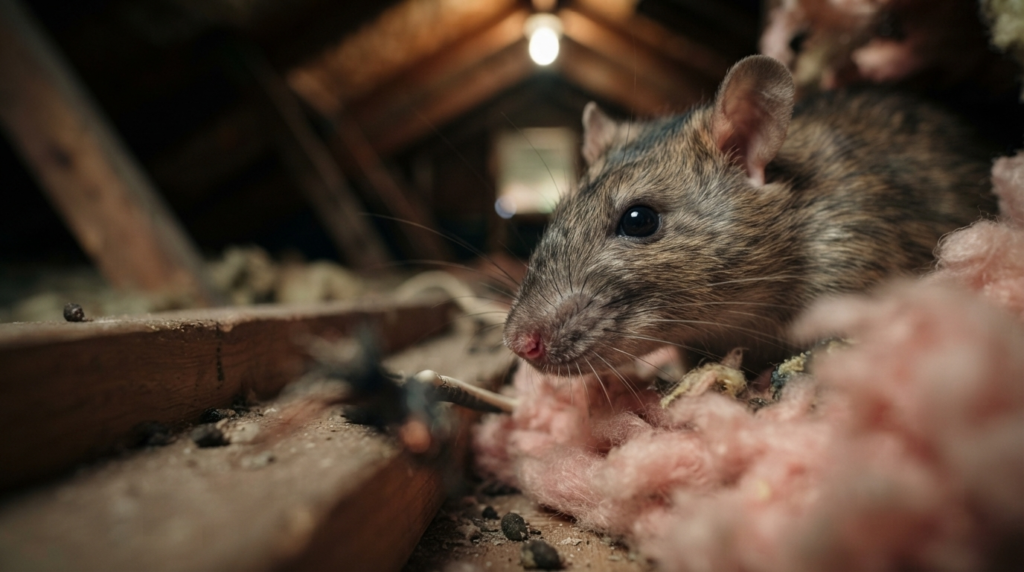
Rats are cautious animals. They avoid open space, stick to the same travel paths, and do most of their moving after dark, which is exactly why so many Torrance homeowners don’t realize they have a problem until it’s already established. These are the six signals we hear about most often on inspection calls.
Grease trails along baseboards and pipes
Rats have poor eyesight and navigate by touch, running the same route along a wall or pipe night after night. Body oil builds up along that path and leaves a dark, greasy smear that doesn’t wipe off easily. Finding one is a near-certain sign of an active, established route.
Gnaw marks on wood, wiring, or plastic piping
A rat’s incisors never stop growing, so gnawing is constant, not occasional. Fresh gnaw marks look light and rough; older ones darken and smooth over with repeated use. Chewed PVC piping or stripped wire insulation in a crawl space is one of the clearest signs we look for.
Finger-sized droppings near food or nesting areas
Rat droppings are considerably larger than mouse droppings, roughly the size of a grain of rice stretched to nearly an inch, with tapered ends. Clusters near pantries, garages, or attic insulation point directly to where a rat has been feeding or nesting.
Heavy scurrying or thumping sounds overhead
Rats are considerably larger and noisier than mice moving through the same space. Torrance homeowners often describe it as a heavier, more deliberate thump above a ceiling or behind a wall, especially right after dusk when rats become active.
Burrow holes near the foundation or in the yard
Norway rats in particular burrow at ground level, often along foundation edges, under sheds, or beneath dense landscaping. A fresh hole roughly two to four inches wide, with smoothed, packed dirt around the opening, is a strong indicator of an active burrow rather than an old, abandoned one.
Pet behavior that changes without explanation
Dogs and cats often notice rat activity long before a homeowner does. Persistent scratching at a wall, staring at the ceiling, or unusual alertness around the garage or attic access point is worth taking seriously. Pets pick up on movement and scent that people simply can’t detect.
A rat colony can double in size within about a month once a breeding pair settles in. The gap between “I think I heard something” and “there’s a real infestation” is often only a few weeks. Acting on the first sign is almost always cheaper and faster than waiting for confirmation.
Why Rat Are So Common in Torrance,CA Homes
Torrance’s rat pressure isn’t random. It comes from a specific combination of climate, geography, and building age that we run into on nearly every job across the South Bay.
A coastal city with no real dormant season
Torrance doesn’t get cold enough, long enough, to force rats into dormancy the way an inland winter does. Mild year-round temperatures and the marine layer’s steady moisture keep rats breeding and foraging on a near-constant cycle, which is why our call volume stays fairly consistent across the calendar rather than spiking in one obvious season.
Roof Rats Love Our Trees
Areas like Hollywood Riviera-adjacent streets, Walteria, and the tree-canopied blocks throughout South Torrance give roof rats exactly what they favor: elevated cover, fruit trees, dense hedges, and easy access from branch to roofline. Roof rats are strong climbers, and a property with mature landscaping close to the house is significantly more exposed.
Harbor Zones Breed Norway Rats
Torrance’s proximity to the harbor, rail corridors, and industrial parks along the 405 and Western Avenue corridor supports ground-level Norway rat populations that migrate into nearby residential blocks in search of food and shelter, particularly where trash storage or landscaping debris is inconsistent.
Older Homes, Easier Entry
Homes built during Torrance’s major growth years in the 1950s and 60s often have foundation settling, degraded weep screeds, and gap-prone roof-to-wall junctions. A rat needs only a gap around the width of a quarter to squeeze through, and older construction details make that far easier than most homeowners assume.
¼ in
Smallest gap a rat needs to squeeze through
6×
Average litters a breeding pair can produce in a single year
18+
Months a rat can live once established indoors with steady food access
Year-round
Peak season for mouse calls across Torrance
Types of Rat Found in Torrance, CA Homes
Torrance properties see two rat species almost exclusively, and identifying which one is present changes where we focus trapping and exclusion. Here’s the practical difference.
Norway Rat
The Norway rat is a burrowing, ground-dwelling rat species that nests at or below grade and rarely climbs unless forced to.
Roof Rat
The roof rat is an agile, climbing rat species that nests above ground in attics, trees, and dense vegetation.
Why Rat Are Dangerous for Your Torrance Home & Family
Rats aren’t a cosmetic nuisance. Left alone, they create compounding risks to health, structure, and safety that get more expensive to fix the longer they go unaddressed.
Disease Risk
Rats are documented carriers of leptospirosis, salmonella, and hantavirus, transmitted through urine, droppings, and contaminated surfaces. Torrance’s older crawl spaces and attics, common entry points for rats, mean contamination can spread into insulation and duct systems without a homeowner ever seeing a rat directly.
Structural Damage
Mice don’t eat much in one sitting, but they revisit the same food sources repeatedly through the night. Every pass leaves behind traces of urine, droppings, and hair. Pantry staples, pet food, even sealed bags aren’t always safe. If mice have been in the kitchen, there’s a real chance food has been contaminated without any obvious sign of it.
Rapid Population Growth
A single female rat can produce up to six litters a year, with roughly six to twelve pups per litter. Left untreated, an initial pair can lead to dozens of rats within a few months, turning a manageable job into a significantly larger one.
Lower Home Value
Active or historical rodent damage is a common flag during home inspections and can affect resale value or delay a transaction. Addressing a rat problem early, with documentation, protects both the home’s condition and its market position down the line.
Our Step-by-Step Rat Removal Process in Torrance, CA
Full Inspection
We walk the interior, attic access, crawl space, garage, and complete exterior perimeter, checking for droppings, gnaw marks, grease trails, and burrow activity. This gives us a real picture of population size and species before any treatment decision gets made.
Species ID
Norway rats and roof rats require different placement strategies, so identifying which one, or both, we’re dealing with shapes everything that follows. We trace grease trails and gnaw damage back to the specific gaps, vents, and rooflines being used as entry points.
Targeted Trapping
Snap traps and tamper-resistant bait stations go exactly where activity is concentrated, not spread out generically across the property. Every placement is based on what we found during inspection, not a standard checklist applied to every home the same way.
Full Exclusion Sealing
Using steel mesh, sealant, and hardware cloth rated for rodent exclusion, we close every gap identified in the inspection. This is the step that actually stops reinfestation. Trapping without sealing just clears the current population and leaves the door open for the next one.
Cleanup & Sanitizing
Attics, crawl spaces, and any area with heavy droppings or nesting material get properly cleaned and sanitized after removal. Leftover scent markers can draw in new rats, so this step protects the work already done.
Prevention Plan
You get a clear summary of what was found, what was done, and specific, practical steps, trash storage, tree trimming, yard maintenance, to keep rats from finding a way back in. Everything is backed by our service guarantee.
Same-Day Rat Removal in Torrance, CA
A confirmed rat problem isn’t something to schedule around. We keep same-day openings available across Torrance and the surrounding South Bay for exactly this reason. Call before noon and we’ll typically have a licensed technician inspecting your property that same afternoon.
Why Choose Rodent Shield Torrance for Rat Removal
There’s no shortage of pest companies working the South Bay. Here’s what homeowners across Torrance tell us actually sets us apart.
10+ Years Local Experience
We’re not dispatched from a call center outside the area. Our technicians have spent 10+ years working specifically in Torrance, Redondo Beach, and Lomita, and that means we already know which streets tend to have roof rat pressure and which zones lean toward Norway rats before we even arrive.
Licensed & Exclusion-Trained
Rat control isn’t pest spraying. It’s structural work, identifying and sealing entry points correctly the first time. Our technicians are licensed and specifically trained in exclusion techniques, not just trap placement.
Upfront, affordable pricing
You get a firm quote before work starts, based on what our inspection actually finds. No inflated estimate designed to pad the invoice later, and no pressure to buy services your property doesn’t need.
Guarantee That Delivers
If rats return within the coverage window after a full treatment, we come back and resolve it at no extra charge. That guarantee is why the majority of our new customers come from referrals from neighbors we’ve already helped.
Frequently Asked Questions
Get Professional Rat Controller in Torrance Today
A rat problem doesn’t get better on its own. Call Rodent Shield Torrance and we’ll have it handled, correctly, the first time.